

AI is moving quickly. The challenge for businesses is not simply keeping up with evolving technology but identifying where it genuinely creates value.
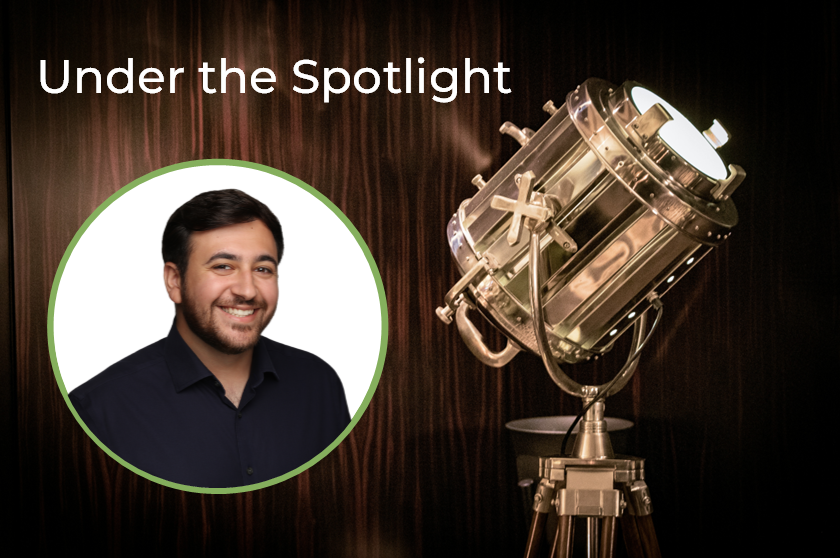
As Oakglen welcomes its new AI Lead, Louis Theodorou, we explore how AI could reshape the way we work, improve client understanding and free our people from the administrative tasks that get in the way of doing their best work.
From automation to governance, AI agents and the future of financial services, our new AI Lead shares a pragmatic view of what comes next.
Thanks for joining us today Louis and a warm welcome to Oakglen. We would love to find out a bit more about you and introduce you to our ever-growing network of clients, financial advisers and professional connections.
What excites you most about joining Oakglen as AI Lead, and what vision have you set for AI across the wider group over the next 1–2 years?
The biggest thing that excites me about my new role at Oakglen is the opportunity to give people better tools to do their jobs in the way they want to do them. Everyone has different parts of their role where they can add the most value. For many, that means spending more time speaking to clients, solving problems, building relationships and using their expertise, while having the right tools to make the administrative side of their work as efficient and effective as possible. That is where I think AI can make a real difference.
There has been a lot of hype around AI experimentation, but I want to move towards something much more tangible: clear business value that people can see in their day-to-day work. That means starting with automation, provided the underlying data is sound, then building adoption whilst ensuring governance around it.
Our initial focus will be on the quick wins. There are straightforward processes that can be automated easily, and there is real value in addressing those first. At the same time, we need to make sure our data is accurate, unified and genuinely useful.
That data foundation becomes increasingly important as we look further ahead. A successful business like Oakglen Wealth has a huge amount of information that, if brought together effectively, could give us much greater insight into how we operate and how we serve clients.
AI is evolving at an extraordinary pace. How do you see it transforming the way our businesses operate and deliver value to clients?
The obvious opportunity is reducing repetitive tasks, but I think the bigger opportunity is what that gives people back. AI can help us conduct research faster, produce reporting more easily and quickly, monitor risks more closely, and support us in meeting the needs of our clients. Often this will improve the way our teams operate behind the scenes without being obvious externally. Ultimately, it is about creating more capacity for people to focus on the areas where their expertise and judgement have the greatest impact.
One principle I feel particularly strongly about is that AI should support human judgement, not replace accountability. That is especially important in financial services. AI will not be making investment decisions, but it could help someone spot something they had not considered or highlight a different perspective. There will always be a human responsible for the outcome.
Where do you believe AI can create the biggest competitive advantage for our organisation, and what opportunities are you most excited to explore?
There is a competitive advantage in acting before something becomes standard practice. A lot of businesses are already talking about AI. Some are genuinely using it, while others are still experimenting. The danger is focusing on how much AI you can use rather than where it makes a difference. For us, the opportunity is to embed AI into people’s existing workflows in a way that saves time and improves quality.
I am particularly interested in internal efficiencies, improving our interaction with clients and identifying potential risks earlier. If we use AI, it should have a clear purpose. It should save time, improve quality or help us make better decisions. It should not be there simply because it makes a good story.
Many people see AI as replacing jobs. How do you see AI empowering our teams and helping people work smarter rather than simply faster?
I see AI as a way of taking ‘low-value’ work off people’s plates. That creates more time for the things that bring unique value to the business: judgement, relationships, problem solving and expertise.
If we remove some of the repetitive work, people have more opportunity to use the skills they were actually hired for. Hopefully AI will not replace a business’s headcount but change the focus of that headcount to more value-add roles.
Innovation is often about changing mindsets as much as technology. How do you plan to encourage AI adoption and build confidence across the business?
I would always start with real pain points rather than putting technology everywhere and hoping people find a use for it. An over-engineered solution can put people off. Most people do not want another platform to learn. They want something simple that makes their working day easier.
The starting point should be understanding how someone currently works, where they experience friction, why that process is painful and what they would want a solution to look like. Then you build it with them. I might think I have designed a good solution, but if it does not work for the person using it, then it is not a good solution.
Keeping people at the centre is critical to adoption. So is building trust. I am fortunate that Oakglen Wealth already had an AI-focused working group before I joined so there was already general enthusiasm and areas identified for this work.
Strong governance is also a big part of that confidence. If people know that AI is being introduced carefully, securely and responsibly, it becomes much easier to embrace.
What emerging AI trends or technologies do you believe businesses should be paying attention to today to stay ahead tomorrow?
Before we get too excited about the newest technology, I think businesses need to pay attention to some of the less fashionable work, particularly cleaning up internal data and knowledge. Once that foundation is in place, AI agents are one of the areas I will be watching closely.
An AI agent is different from a tool that simply gives you an answer. It can potentially make decisions within defined parameters and execute actions on your behalf. That opens up some very interesting possibilities, but it also raises important questions about how much autonomy businesses are comfortable giving AI.
The next few years will be interesting because we will see businesses testing the boundaries of that risk appetite. Governance will have to develop alongside the technology.
As AI becomes more integrated into business, how important are ethics, governance, and responsible AI in your strategy?
They are essential, particularly in financial services. You need to be able to explain what AI has done, why it has been used and what controls are in place to mitigate the associated risks. Regulators such as the FCA and the JFSC have made the importance of responsible and controlled use of AI increasingly clear. This is not something businesses should do lightly.
One practical approach I am establishing is a clear record of the AI projects we undertake. What is the AI being used for? What problem is it solving? What guardrails are in place? How is the data being protected?
It should be treated in much the same way as selecting any other product or application for the business. We need to understand what it does, what risks it introduces and whether it is appropriate for the job.
If we were having this conversation five years from now, what achievements would make you feel you’ve genuinely transformed the business through AI?
I would want AI and automation to be embedded into everyday work rather than sitting on the sidelines as a fad or shiny side project. I would want to see measurable time savings, but also people feeling empowered to draw useful insights from the data they already use. Ultimately, if what we are doing leads to better client service, I will consider that a success.
I would also like to see a culture where people naturally identify opportunities to improve processes with AI. That means giving colleagues enough education and experience to understand where AI can help and, just as importantly, where it should not be used.
The real measure of success will not be how much AI we have. It will be what the business can do better because of it.
What first sparked your interest in AI, and what has kept you passionate about the field?
I have been quite obsessed with technology in general since I was a child. Family and friends would always trust me with their tech and electronic devices, so I suppose I naturally became the person people went to when something needed fixing.
That eventually led me to study for a Master’s Degree in Computer Science, where I worked on a machine learning research project. Seeing first-hand what these emerging technologies could do, and how they could be applied to everyday life, really captured my interest.
What has been particularly exciting is watching AI move from something that felt largely theoretical into something businesses can genuinely use. The appetite businesses now have to explore what AI can do is fascinating. This role is a great fit for me because it brings together problem solving, people and relationships with emerging technology and AI tools.
AI changes almost daily. How do you stay ahead of new technologies while separating genuine innovation from industry hype?
Every time I search for material and content on Google, it often feels as though organisations have overused the labelling of AI on things. There is a lot of noise in the sector, so I try to stay close to credible university publications, product updates and real-world case studies. I judge tools on their usefulness, security and reliability rather than simply believing the bold claims about what they can do.
Hype can disappear very quickly. I am much more interested in tools that demonstrate their value over time. We will be taking that same approach at Oakglen. We want to use proven technology, with a strong regulatory mindset around how it is introduced and used.
Was there a particular AI breakthrough or project that made you realise how transformative this technology could become?
The obvious one was the release of ChatGPT. For the first time, generative AI became accessible to almost everyone, regardless of how technical they were. Someone could use it to write code, develop an idea for a creative project, improve their spelling and grammar or explore a subject they knew very little about. It effectively gave everyone access to a certain level of intelligence and made people think differently about what technology could help them achieve.
It changed how we think about work and how we study, and things have since developed enormously since ChatGPT was launched. Watching that evolution has been one of the most exciting aspects of working in this field.
What qualities do you believe make a great AI leader, particularly in a business where technology and people must evolve together?
I think commercial judgement is incredibly important. It is easy for a business to buy a collection of AI tools and hope that one of them proves useful. That is not a strategy.
Communication is just as important. You need to be able to understand complex technology and explain it in straightforward terms. Not everyone wants to do a Computer Science degree just to understand how a particular tool works.
You must meet people where they are. The technology needs to fit into their workflow rather than expecting them to completely change the way they work for the sake of the technology. Ultimately, technology does not matter if nobody wants to use it.
Outside of work, are there any books, podcasts, creators, or technologies that inspire your thinking about the future?
There are a few, although some are quite niche. I follow several people in the field on LinkedIn who share updates on AI trends and what they are learning, as well as some creators on YouTube.
One of the challenges is finding people who provide genuinely useful content about AI without immediately trying to sell you a course, subscription or some other package. You can usually spot quickly when someone does not have much real knowledge of the subject.
I particularly enjoy watching people actually use AI tools to solve real problems. Seeing how AI can be applied to provide tangible benefit to businesses or society is much more interesting to me than simply hearing about what a tool supposedly can do.
When you’re not immersed in AI, how do you switch off and recharge?
I have recently got into cycling around London. It gives you a completely different perspective of the city, particularly when you are cycling into work rather than travelling through the underground or by car.
I have also recently got a kitten called Kouba, so I am currently on parental duties there too as they are settling in.
If you could solve one major business challenge using AI tomorrow, what would it be and why?
If I could solve one major business challenge tomorrow, I think it would be making better use of all the knowledge a business already has. There is so much useful information sitting in emails, documents, meeting notes and, quite often, just in people’s heads. I would love to get to a point where someone could ask AI a question and it could pull together the relevant context, previous decisions and information almost instantly.
I think that would be incredibly powerful because businesses do not necessarily need more information but could do with making better use of what they already know. If someone can find the right answer in seconds rather than spending half an hour searching for it or asking around, that would be hugely beneficial.
Finally, what’s one misconception about AI that you’d most like to change?
People think that AI is a magic silver bullet that can be left alone to make good decisions. To get good results though, you still need clear objectives, good data, appropriate controls and human judgement. I often describe AI tools as being like an intern. They can be highly capable, but they still need strong and clear direction.
For me, the best use of AI is as a capable assistant. It should help people do better work, not become an unchecked system that makes decisions for them. If we get that balance right, AI should make people feel more capable in their jobs, not less important.
Thanks for your time, Louis, it was a pleasure chatting with you today.
We hope you enjoyed this interview and gained some insights into the new member of our team. You can read similar content for our more established team members below:
Under the Spotlight: Jamie Martin – Placement Intern (UK)
Under the Spotlight: Tara Le Feuvre – Assistant Investment Manager (Jersey)