


In this article, Nigel Smith, Business Development Executive, and William Lamond, Investment Director, examine the profound transformation reshaping global security and the defence industry. As Western nations embark on their most significant rearmament since the Cold War, China is advancing a quieter yet equally formidable revolution; one waged through cyberspace, outer space, and information dominance.
Drawing on both financial insight and military experience, we explore how this dual evolution of conventional rearmament in the West and “invisible” warfare in the East, is redefining deterrence, reshaping global markets, and forcing investors and policymakers alike to rethink what national security means in the twenty-first century.
The New Age of Defence: From Re-Arming the West to China’s Silent Arsenal
For over three decades after the Cold War’s end, much of the developed world treated defence spending as an afterthought. The dissolution of the Soviet Union ushered in a “peace dividend,” allowing governments to divert military budgets toward domestic and social priorities. Defence contractors endured decades of stagnation, their earnings anaemic and share prices flat. As Environmental, Social, and Governance (ESG) investing took hold, the sector’s moral legitimacy – and attractiveness to investors – waned even further.
That world no longer exists.
The Russian invasion of Ukraine shattered the illusion of lasting peace in Europe. The subsequent deterioration of global stability, from the Middle East to the South China Sea, has transformed defence from a neglected necessity into a strategic imperative. Recent remarks by US President Donald Trump, suggesting that NATO allies should not expect automatic protection from Washington, added urgency to a growing realisation: Europe must once again take responsibility for its own security.
The Reawakening of Western Defence
In response, most NATO nations have now pledged not only to meet but to exceed the Alliance’s long-standing 2% of GDP defence spending target. Plans are already being discussed to lift this figure to as much as 5% by 2035. This commitment represents the most significant rearmament effort since the Cold War – investors have taken notice.
Shares in major Western defence companies such as Rheinmetall, Thales, Leonardo, and BAE Systems have surged, reflecting renewed earnings growth and expectations of a sustained uptrend. Germany, Italy, and the UK have all implemented policy shifts to accelerate defence procurement and domestic production. What was once a morally fraught investment theme has become a pragmatic one: national security is back in fashion.
Yet while the West rebuilds its conventional capabilities – tanks, missiles, and ships – a very different kind of warfare is already being perfected elsewhere.
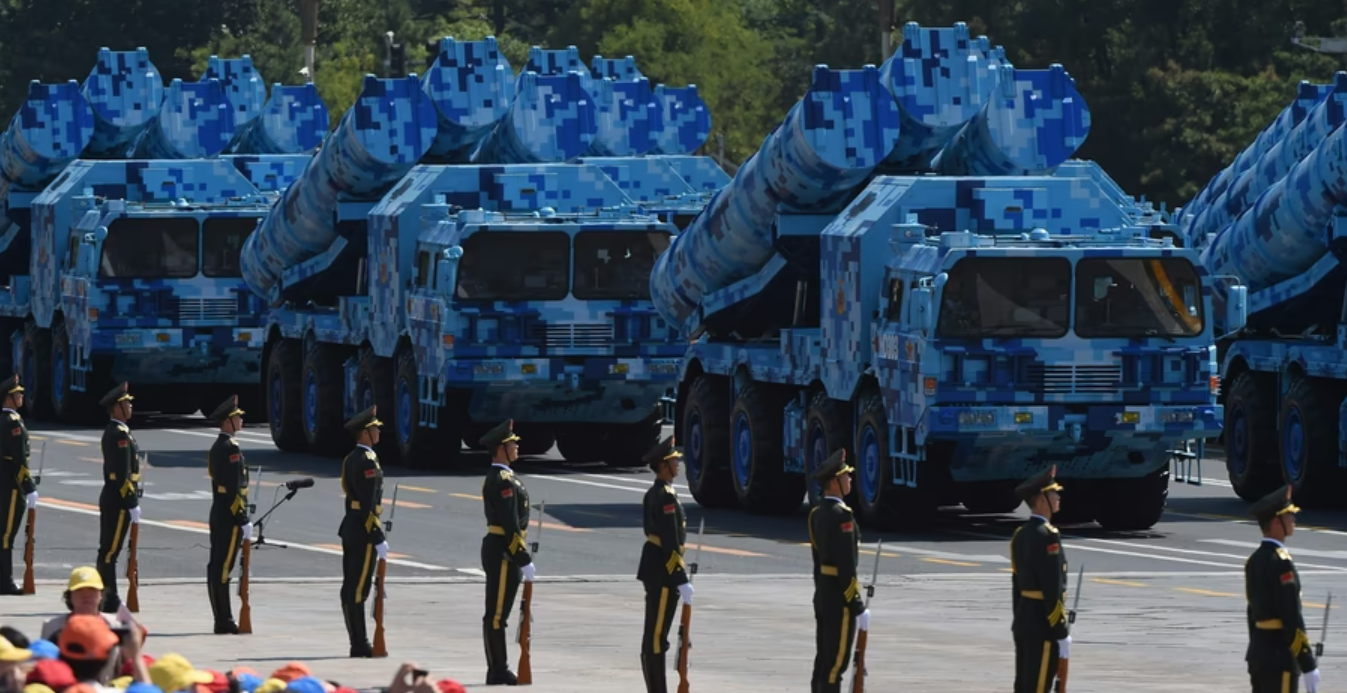
Beyond the Parade: China’s Invisible Arsenal
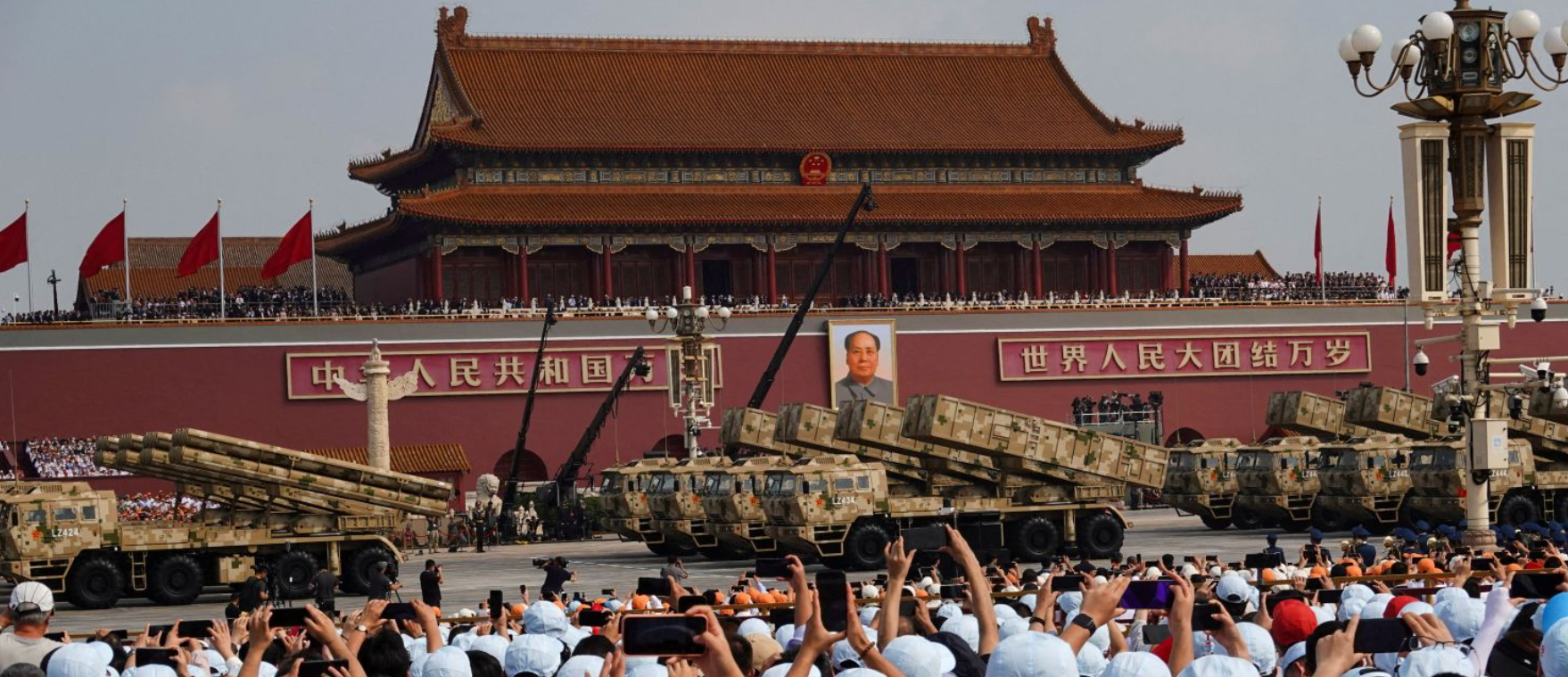
In September 2025, Beijing marked the 80th anniversary of Japan’s defeat in World War II with a spectacular military parade. Hypersonic missiles, laser weapons, and AI-powered uncrewed systems rolled through Tiananmen Square, showcasing the People’s Liberation Army (PLA) as a modern, multidomain force. But China’s most formidable weapons were not on display.
The real power lies in the invisible domain: cyberspace, outer space, and the digital arteries that connect the world. These are the realms of Unrestricted Warfare—a doctrine first articulated in 1999 by PLA officers Qiao Liang and Wang Xiangsui. Their radical thesis was simple but devastating – wars of the future would not be fought solely with bullets and bombs, but with “ten thousand methods combined as one” – from cyber intrusions and financial disruption to information manipulation and psychological operations.
The New Battlespace
China’s cyber and counter-space capabilities have matured dramatically. Operations such as Volt Typhoon and Salt Typhoon have already compromised Western communications, energy, and water systems, establishing latent access points that could be activated in a crisis. In orbit, Beijing has deployed high-energy lasers, jammers, and even satellites equipped with robotic “snake arms” designed to disable or manipulate adversary spacecraft.
These tools form part of the so-called “Assassin’s Mace” strategy – technologies engineered not for parity, but for asymmetric advantage. Instead of confronting superior Western firepower head-on, China seeks to render it useless by targeting the networks and systems that enable it. A single cyber strike, data manipulation campaign, or financial shock could cripple military readiness and sow civilian panic without a single shot being fired.
Deterrence Reimagined
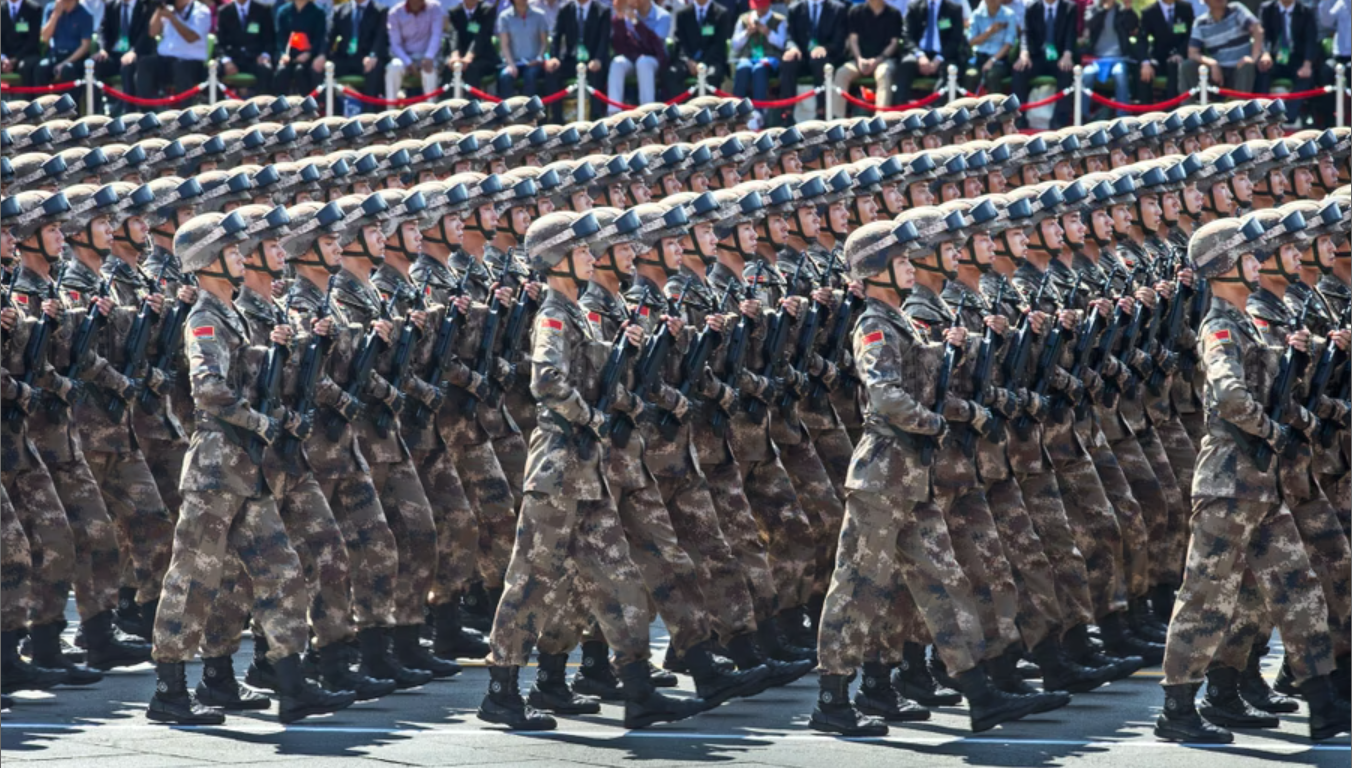
China’s 2025 parade was, in essence, deterrence theatre – a kinetic display meant to inspire awe. But the real deterrent lies in the capabilities that were absent. The PLA’s new Cyberspace Force and Information Support Force are tasked with achieving “intelligentised warfare,” where dominance of information and control of perception outweigh raw firepower.
This evolution exposes a critical vulnerability for the West. NATO and the U.S. Space Force have begun simulating space and cyber conflicts through exercises such as the Schriever Wargames, yet experts warn that attribution, defence, and deterrence in the cyber realm remain dangerously underdeveloped. The result is strategic ambiguity: China can operate below the threshold of open conflict while achieving strategic gains.
Strategic and Investment Implications
For investors, the convergence of these trends – the West’s renewed military build-up and the East’s mastery of non-kinetic warfare – marks the emergence of a dual-track defence revolution. Traditional contractors are poised to benefit from increased procurement of conventional systems, while a new generation of companies at the intersection of cybersecurity, AI, and space technology will define the next frontier of defence investment.
The doctrine of Unrestricted Warfare challenges not only military strategists but also markets – future conflicts will be fought as much in data centres and orbital paths as in trenches and skies. National resilience – cyber, financial, informational – will become the ultimate measure of security.
The New Reality
Whether palatable or not, defence is once again central to global stability and economic strategy. The West is rearming; China is redefining warfare itself. As geopolitical rivalries intensify, investors and policymakers alike must confront an uncomfortable truth: the future of conflict is already here, and it doesn’t always go bang.
Capital at Risk.
The price and value of investments and any income that might accrue may fall as well as rise and is not guaranteed. You may not get back the amount of your original investment.
Our Contributors
This article includes investment commentary from William Lamond and wider (military specific) commentary from Nigel Smith.
Nigel Smith
Business Development Executive, Jersey
Nigel served in the British Army for 28 years including operational stints in Northern Ireland, the Middle East and the Horn of Africa. He served in the Infantry, commanded a training battalion and served alongside the US Marine Corps including senior instructional posts at Fort Benning (US), RMA Sandhurst and the Infantry Battle School in Wales.
William Lamond
Investment Director, Jersey
William has more than 22 years of experience in fund management and wealth management, having previously worked at Lloyds TSB Fund Managers Bank and Canaccord Genuity (formerly Collins Stewart). He is a Chartered Wealth Manager and a Fellow member of the Chartered Institute for Securities & Investment (CISI), holding the Private Client Investment Advice and Management qualification and the CISI Certificate in Securities. He splits his time between investment research activities and advising high/ultra-high net worth private clients, family offices and charities.
Hear more from the Oakglen experts
Our investment team continue to provide interesting and informative content to help keep you in the loop on recent global news and market trends. See below for some key highlights from around the world which our investment team have recently covered:
Read more:
- A Merger of Equals: Anglo American and Teck Resources Combine
William Lamond, Investment Director (Jersey)
- October 2025 Investment Summary
Jeff Brummette, Chief Investment Officer
- Central Bank Update: September 2025
Jeff Brummette, Chief Investment Officer
- H1 2025: Discretionary Investment Management Service Update
Myles Renouf, Senior Investment Manager (Jersey)
You can read other articles from the team on our News & Insights page here.
Want to become an Oakglen client?
Get in touch with one of our wealth team via our website to hear more about our products and services, and how suitable they are for you and your personal circumstances.